W 2 Tax Form Explained Simply
It shows your earnings and taxes withheld, crucial for filing your federal income tax return.
The W-2 Tax Form, also known as the Wage and Tax Statement, is one of the most important documents you will receive as an employee in the United States. It's crucial for filing your tax return each year and understanding your income and tax deductions. Let's dive into what the W-2 Form is all about and how it impacts your overall Tax Return.
What is a W-2 Form?
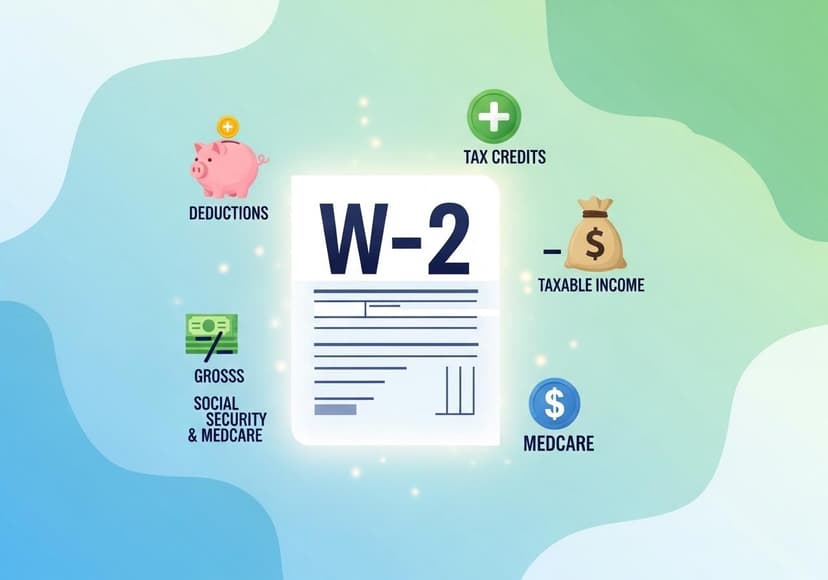
A W-2 Form is issued annually by employers to report an employee's wages and the amount of taxes withheld from their paycheck. This form is essential because it summarizes your total earnings and taxes deducted over the year, including Federal Income Tax Withheld, Social Security Tax, and Medicare Tax.
In fact, your W-2 will be your go-to document for understanding not just how much you made, but also how much of your income went to taxes. Without this information, filing your Tax Return would be almost impossible!
What Information is Found on the W-2 Form?
Your W-2 Form is divided into several boxes, each containing significant information. The most crucial ones include:
- Box 1 Wages: This box shows your total taxable income for the year, which includes wages, tips, and other compensation.
- Box 2 Federal Income Tax Withheld: This indicates how much federal tax has been deducted from your paycheck throughout the year.
These figures are vital when you prepare your Tax Return. They determine your Taxable Income and how much you may owe or be refunded.
Understanding Gross Income and Adjusted Gross Income
Your Gross Income encompasses all your earnings before any deductions or taxes are taken out. It's the starting point to calculate your Adjusted Gross Income (AGI), which is your total income minus specific deductions, such as retirement contributions or student loan interest. Your AGI plays an important role in determining your tax liability and eligibility for certain tax credits.
Your W-2 directly influences your Gross Income since it reports the income you've received from your employer. Any discrepancies in this form can lead to complications when filing your Tax Return.
How to Use Your W-2 When Filing Your Tax Return
When it comes time to file your Tax Return, your W-2 plays a critical role. You'll need to refer to it for accurate data. Most tax preparation software will prompt you to enter the information from your W-2, ensuring everything matches up correctly.
It's essential to check for errors on your W-2 before you file. If you notice any discrepancies, contact your employer immediately to get them resolved. Errors could lead to delayed filing or complications with the IRS.
About Taxes Withheld: What’s the Breakdown?
Let's dive deeper into the taxes that are reported on your W-2 Form:
- Federal Income Tax Withheld: This tax is mandatory and depends on your earnings and filing status.
- Social Security Tax: This tax funds the Social Security program, providing financial support for retirees. The rate is typically around 6.2% of your wages.
- Medicare Tax: This tax helps fund Medicare, a health insurance program. The standard rate is usually 1.45% of your wages.
Understand that these taxes are taken out of your paycheck throughout the year, and how much is withheld will impact your overall Tax Return. Under-withholding could mean you owe the government come tax time, while over-withholding could result in a tax refund.
What Happens If You Don’t Receive a W-2 Form?
If for some reason you do not receive a W-2 Form from your employer by the end of January, you must take action. You can first check in with your HR department or payroll representative to ensure it was sent. If you still haven't received it, you can use Form 4852, which substitutes for your W-2 when filing your Tax Return.
Keep in mind that failing to provide a W-2 could result in complications, so it's best to resolve any issues quickly. For more in-depth information on this topic, visit Understanding Your W-2 Form.
How to Read Your W-2 Form
When you finally get your hands on your W-2, how do you read and understand it? The form is broken into different boxes, and here’s a quick rundown of some key ones to watch out for:
- Box 1: Wages, tips, other compensation (your income before tax).
- Box 2: Federal Income Tax Withheld (what’s been taken out for federal taxes).
- Box 3: Social Security Wages (this may differ from Box 1 if you have pre-tax contributions).
- Box 5: Medicare Wages (also may differ from Box 1).
Understanding these sections helps demystify your financial situation, ensuring your tax filing goes smoothly. If you still have questions after reviewing your W-2, consider checking out resources like W-2 Form: What You Need to Know.
Tax Credits and Deductions: The W-2’s Role
Your W-2 Form doesn’t detail credits and deductions, but it lays the groundwork. Once you know your Taxable Income, you can apply for credits like the Earned Income Tax Credit (EITC) or Child Tax Credit, which can significantly reduce your tax burden.
Understanding your W-2 is crucial for maximizing these benefits. Many individuals overlook these opportunities during their Tax Return process, which could lead to paying more taxes than necessary.
Final Thoughts: The Importance of Keeping Your W-2 Secure
It's vital to keep your W-2 secure and accessible, as you will need it for not only this year's Tax Return but possibly for the years to come. Store it in a safe place, either physically or digitally, and ensure you have easy access to it.
In conclusion, your W-2 Form is more than just a piece of paper; it’s an essential tool for understanding your financial situation and fulfilling your tax obligations. If you find yourself feeling lost or overwhelmed when it comes time to file your Tax Return, remember you are not alone. Resources like W-2 Forms: Everything You Need to Know can be invaluable in guiding you through the process!
Posts Relacionados

2026 Blue Car Kelley Blue Book Values
The blue car's worth in 2026 can be determined using Kelley Blue Book values for estimated pricing.

21 Month Zero Percent Balance Transfer Cards
These cards offer an extended period without interest, ideal for consolidating debt and saving on interest charges.

Calculate House Payment
Determining mortgage costs involves principal, interest, taxes, and insurance. Accurate figures help with budgeting and affordability assessment.